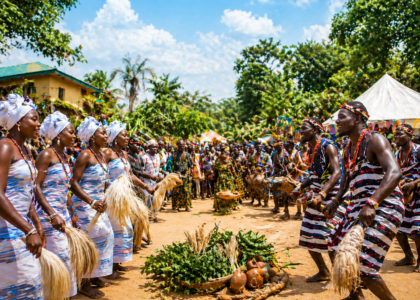
Nestled within the culturally rich landscape of Akoko-Edo Local Government Area in Edo State, the Dagbala community continues to preserve its heritage through unique and meaningful traditional festivals. One of such remarkable celebrations is the OMEDO Festival, popularly known as Borolegbe—a cultural event that embodies the identity, history, and unity of the people.
Dagbala, one of the notable towns in Akoko-Edo, shares in the broader cultural diversity of the region, which is known for its deep-rooted traditions and communal lifestyle. ([Wikipedia][1]) The OMEDO (Borolegbe) Festival stands as a testament to this heritage, serving as a symbol of continuity between generations.
The festival is traditionally celebrated with a blend of rituals, music, and communal gatherings that reflect the values of the Dagbala people. It is often associated with cultural renewal, social bonding, and respect for ancestral traditions. During the festival, elders, youths, and families come together in a shared celebration that reinforces unity and collective identity.
One of the highlights of the OMEDO Festival is the display of traditional attire and cultural performances. Participants adorn themselves in distinctive clothing, beads, and ornaments that represent their lineage and status within the community. The atmosphere is filled with rhythmic drumming, singing, and energetic dances that bring the community to life.
The festival also plays an important role in preserving indigenous customs and educating younger generations. Through storytelling, rituals, and participation, cultural knowledge is passed down, ensuring that the traditions of Dagbala remain vibrant and relevant in modern times. This reflects a broader pattern seen in many communities in the region, where festivals serve as tools for unity, discipline, and shared responsibility. ([edoworld.net][2])
Beyond its cultural significance, the OMEDO (Borolegbe) Festival is a time of reunion. Indigenes living outside the community often return home to reconnect with their roots, celebrate with loved ones, and contribute to the development of the community.
In essence, the OMEDO Festival is more than an event—it is a celebration of identity, pride, and heritage. It showcases the enduring spirit of the Dagbala people and their commitment to preserving their culture for future generations.
As interest in indigenous traditions continues to grow, festivals like OMEDO (Borolegbe) serve as powerful reminders of the richness of Nigeria’s cultural diversity and the importance of keeping these traditions alive.